Custom Silicon
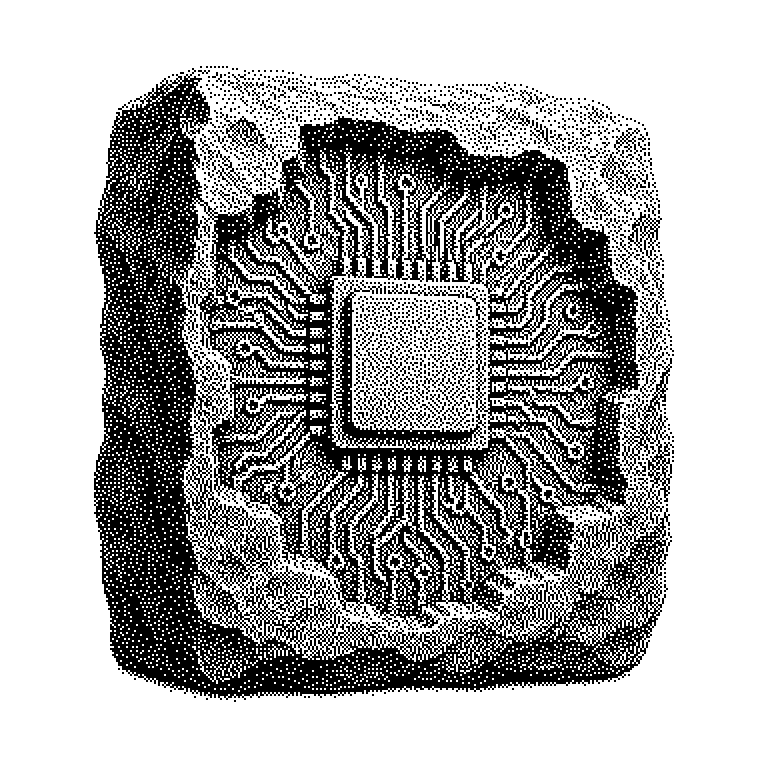
Custom Silicon refers to computer chips that a company has specially designed for its own tasks, rather than buying standard off-the-shelf chips. In the AI industry, almost every major corporation now builds such chips of its own in order to cut costs and reduce dependencies.
Every computer computes with chips: small components made of silicon that contain billions of tiny switches. Normally, you buy such chips ready-made, just as you’d buy a car at a dealership. Custom Silicon is the other route. A company has a chip designed from the ground up so that it does exactly the tasks that arise in its own operations — and nothing else. The English term literally means something like “tailor-made silicon.” Google, Amazon, Apple, Microsoft, and Tesla all do this, and their chip names regularly turn up in business news.
What drives corporations to build their own chips
The first reason is money. AI systems need enormous computing power, and the graphics cards typically used for this, made by Nvidia, cost a five-figure sum apiece. Anyone running hundreds of thousands of them spends billions. A self-designed chip can be expensive to develop, but becomes significantly cheaper per unit when deployed in large quantities.
The second reason is independence. Nvidia has held a market share of roughly 80 to 90 percent in AI chips for years. Anyone who can only buy from there must accept whatever prices and delivery times come their way. Owning chips of your own provides bargaining power — even if you continue to buy a lot from Nvidia.
The third reason is efficiency. Standard chips have to be reasonably good at many different things. A specialized chip can perform a single task significantly faster and with less power. For data centers that consume as much energy as a small city, that’s a tangible advantage.
From design to finished board
Hardly any corporation manufactures its chips itself. Almost all of them only design and hand off production. This division of labor is called fabless: you have no factory of your own. Manufacturing mostly takes place at TSMC in Taiwan, the world’s leading contract manufacturer for cutting-edge chips.
The trick in designing lies in leaving things out. An AI chip above all has to perform one type of calculation extremely often: multiplying and adding many numbers. So you build in a great many computing units specifically for that, and strip out everything you don’t need — such as circuits for video game graphics. The comparison with tools fits well: a Swiss Army knife can do many things, but anyone sawing wood all day picks up a saw instead.
The price for this is rigidity. Developing such a chip typically takes two to four years and costs hundreds of millions of dollars. If common AI methods change significantly during that time, the chip fits worse than planned. In addition, the software is initially missing: programmers know Nvidia’s tools, but for a new chip everything first has to be written from scratch. This is precisely what has caused several chip projects to fail.
Well-known chips and how to recognize them in the news
Google has been operating the TPU, short for Tensor Processing Unit, since 2015. Amazon uses the chips Trainium and Inferentia in its cloud — the names already reveal that one is meant for training models and the other for using them. Microsoft has introduced Maia, Meta is working on a chip family called MTIA. OpenAI announced multiple times in 2024 and 2025 that it is developing its own chips together with partners.
But Custom Silicon is also found in devices that many people hold in their hands every day. Apple’s M- and A-series chips in Macs and iPhones are proprietary designs. This is precisely what part of the long battery life relies on: chip and operating system are tuned to each other. Tesla’s driver-assistance system likewise runs on in-house chips.
In stock market news, Custom Silicon is almost always a story about power dynamics. When a corporation announces its own chip, investors read this as an attack on Nvidia’s dominance. A common misconception here is to mistake Custom Silicon for the end of Nvidia. In practice, both worlds run in parallel: proprietary chips take over the predictable mass workload, while standard chips remain in use for everything new and experimental.