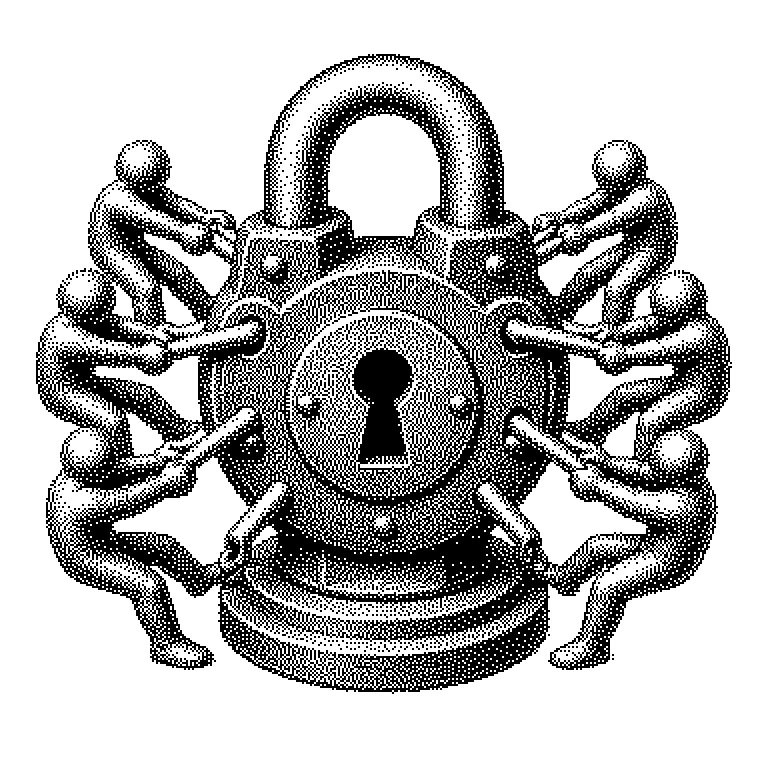
Lock Contention
Lock contention describes the problem that occurs when multiple parallel processes try to access the same locked resource at the same time and must wait for one another. The more waiting time this creates, the slower the entire system operates.
In a computer, many tasks run simultaneously. So that they don’t get in each other’s way, there are so-called locks. A lock secures a resource, such as a memory area or a database row, so that only one process can modify it at a time. Lock contention occurs when multiple processes wait for the same lock at the same time. Whoever can’t get through has to stand still. The more often and the longer this happens, the more time is lost — even though the hardware would actually have enough performance.
Lock Contention as a Bottleneck
The problem is not easy to detect. An application can suddenly slow down under high load, even though the processor and memory are barely utilized. The bottleneck then isn’t a lack of hardware, but rather that processes are stuck in a queue.
A concrete example: An online database manages account balances. Every transaction briefly locks the affected row. With few users, this isn’t a problem. With a thousand simultaneous transactions on the same account, 999 processes wait until the first one is finished. This backlog is called lock contention. In real systems, it can reduce processing speed many times over.
This is especially relevant for AI systems that process large amounts of data in parallel. Training and database queries often run on thousands of processes simultaneously. Even a single poorly placed lock can slow down the entire process.
How a Lock Works — and When It Becomes a Problem
A lock works like a key to a room: whoever has it may enter and work. Everyone else waits outside. As soon as the first one is done, they pass the key along. This principle is called mutual exclusion, or “mutex” for short. It is fundamentally sensible, because without such locks, chaotic states can arise: two processes modify the same number at the same time, and the result is random and wrong.
Lock contention doesn’t arise because the lock itself is faulty. It arises because too many processes access the same area too often. Developers combat this in various ways: they can make locked areas smaller, so that multiple locks exist side by side. Or they use lock-free data structures, which get by with special hardware instructions without needing classic locks. Another method is called sharding: the data is divided into several independent parts, each with its own locks.
A common misconception is that more processor cores automatically bring more performance. But if all cores are waiting for the same lock, an additional core brings nothing at all. More parallelism can even worsen lock contention — because more participants join the queue.
Lock Contention in Practice: Databases, Operating Systems, and AI
In databases, lock contention is one of the most common performance problems. Systems like PostgreSQL or MySQL have their own tools to measure how long processes wait for locks. Database administrators check these values regularly, especially when applications slow down under load.
The problem also occurs in operating systems. The Linux kernel contains millions of lines of code that work with locks. Developers there speak of “lock contention” as its own field of research. There are even special profiling tools — that is, measurement programs — that record exactly where processes most frequently collide.
In the field of machine learning, one encounters this term especially when training large models on many graphics chips simultaneously. The individual chips must synchronize their intermediate results and, in doing so, access shared memory areas. If this is poorly handled, lock contention arises right there — and training takes longer than necessary. Companies like Google and Meta are investing significantly in making this synchronization more efficient.