Model Inversion
Model inversion is an attack in which someone works backward from the responses of a finished AI system to figure out what data it was trained on. This can bring confidential information back to the surface that was only ever meant to remain within the training process.
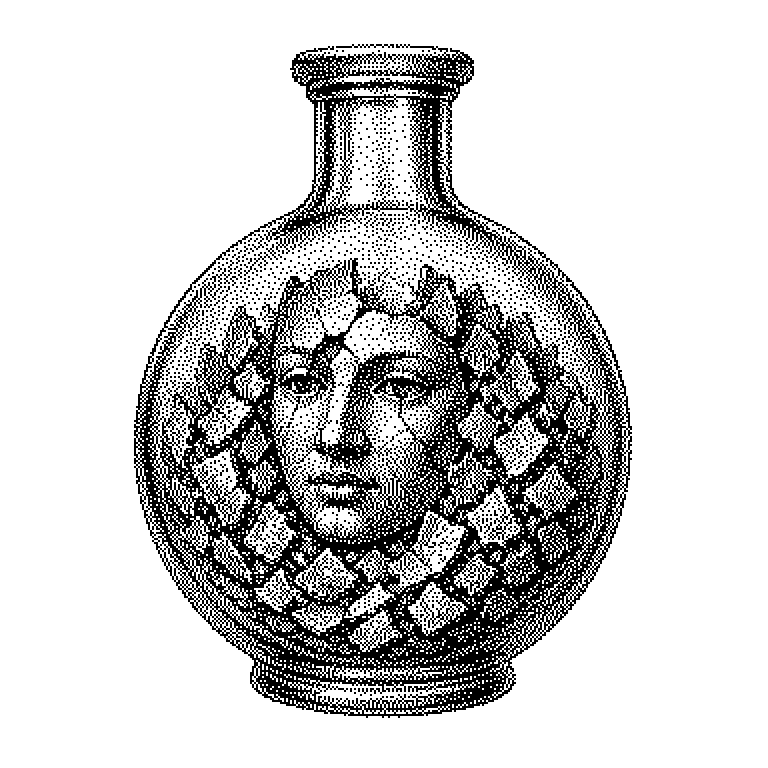
A computer program that learns from examples is called a model. It might be shown thousands of photos with names attached, and afterward it can recognize faces. The photos themselves are supposed to stay secret, only what was learned is released. Model inversion reverses this process. An attacker asks the finished program a very large number of questions and closely observes the answers. From these answers, they reconstruct, piece by piece, what the original examples looked like. In the best case for the attacker, the end result is a recognizable face or an actual dataset belonging to a real person.
Why it matters
Many AI systems are trained on sensitive data. Clinics use patient records, banks use account transactions, government agencies use ID photos. The data stays in-house, only the trained model goes outward or into an app. This is precisely the idea on which the assumption of preserved data privacy rests.
Model inversion attacks this assumption. If training data can be recovered from a model, the model itself is a data leak. This can become costly for companies, since European data protection rules strictly protect personal data. Fines and product recalls are possible consequences. That is why such attacks now appear in security audits and in reports from regulatory authorities.
How it works
A model rarely gives just a terse verdict. Usually it also provides numbers expressing its confidence. A facial recognition system, for example, might answer: 87 percent match with Person A. This number is the lever for the attack.
The attacker starts with random image noise and sends it to the model. The feedback is initially low. Now they slightly alter the image and ask again. If the value increases, they keep the change; otherwise they discard it. After many thousands of rounds, the image converges toward what the model has learned. It is like a search game where the other player only says warmer or colder. Given enough questions, you can still find the hiding spot.
It becomes especially dangerous when a model has memorized certain examples by rote. Experts call this memorization. Language models can, in this way, reproduce entire passages of text from their training data, such as addresses or passwords. The primary countermeasure is considered to be differential privacy: during training, a small amount of random noise is deliberately introduced. The model then learns general patterns, but not individual people precisely. It also helps to expose fewer detailed figures externally and to limit the number of queries allowed per user.
Where you encounter the term
Model inversion is most often mentioned in reports about AI security. Research groups regularly demonstrate that they were able to extract training data from a known image or language model. Such findings frequently lead providers to change their interfaces.
The term is also more relevant to everyday life than it might sound. Anyone offering an AI model over the internet must expect users to systematically probe it with questions. That is why many providers today deliver only the final result and no precise confidence scores. In the field of medical AI, model inversion is a standard argument against open model publication. And under the EU’s regulatory framework for artificial intelligence, such attacks count among the risks that operators of high-risk systems are required to assess. For investors, this is a cost factor: protective measures like differential privacy often degrade a model’s accuracy.