NPC
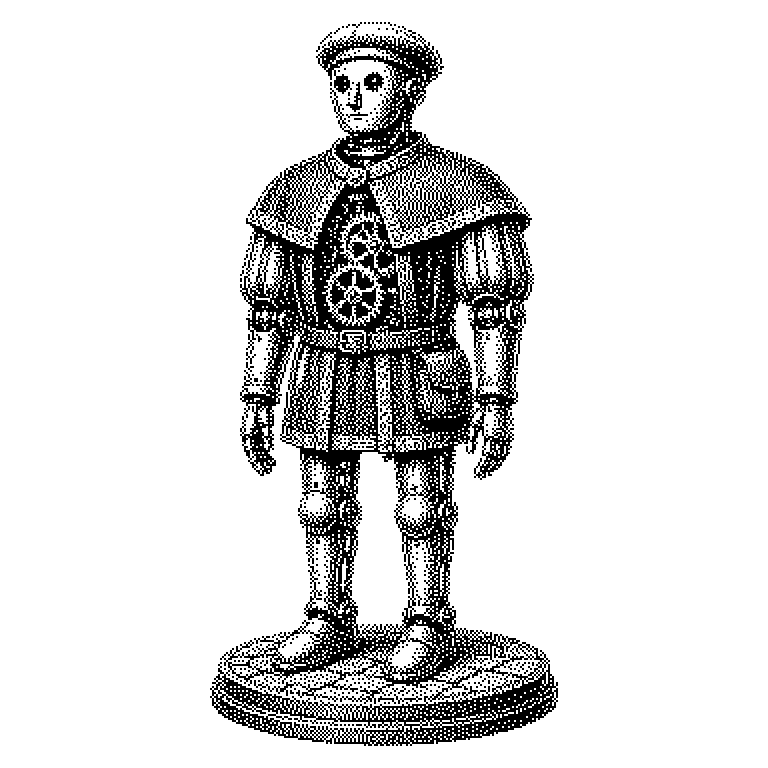
An NPC (Non-Player Character) is a character in a video game that is not controlled by the human player, but by the game itself. NPCs populate game worlds, hand out quests, trade goods, or fight — and thanks to AI, they are increasingly becoming more conversational and autonomous.
Every video game contains characters that no human controls. They walk through cities, sell items, hand out quests, or attack. These characters are called NPCs — short for Non-Player Characters. The term originates from pen-and-paper role-playing games like Dungeons & Dragons, where the game master embodies all characters that don’t belong to the players. In video games, a program takes on that role. How convincing a game world feels often depends directly on how believably its NPCs behave.
NPCs as the backbone of the game world
Without NPCs, a game world would be empty. They fill cities with life, drive the story forward, and give the player goals. In a role-playing game like “The Elder Scrolls V: Skyrim,” there are hundreds of them — merchants, guards, villagers, enemies. Each has a function, and some even have their own daily routine.
NPCs are also the most important tool for conveying game rules. An old mentor who explains to the player at the beginning how combat works is almost always an NPC. Without these characters, games would have to explain their mechanics through text boxes and manuals — which works considerably less well.
How an NPC makes decisions
Behind every NPC lies a set of rules that determine its behavior. The simplest form is a so-called decision tree: if the player comes near, the character turns around. If the player attacks, it fights back. If its health drops, it flees. That sounds simple — and usually it is. Many NPCs follow very narrow scripts and as a result quickly come across as predictable.
More sophisticated games rely on so-called state machines or goal systems. Here, an NPC isn’t given a fixed script but a goal — for example, “go home at 6 p.m.” — and finds its own way to achieve it. This makes the behavior more flexible. Enemies in games like “Halo” use such systems: they seek cover, flank the player, and call for reinforcements. This feels more tactical because the characters react to changing situations instead of stubbornly working through their script.
Since language models — that is, programs that understand and generate text — have become more accessible, developers have been experimenting with equipping NPCs with them. Instead of scripted dialogue lines, the player can then type freely, and the character responds in a contextually appropriate way. This is technically demanding and hasn’t yet arrived in major games, but it is considered one of the most exciting developments in game development.
NPCs beyond the screen
The term NPC has long since outgrown video games. On the internet, it has been used as an insult since around 2016: someone labeled an “NPC” is supposedly incapable of independent thought and merely parrots what others say. This usage is derogatory and has little to do with the original technical meaning — but it shows how deeply the term has become embedded in pop culture.
In the tech and AI industry, NPC mainly comes up in discussions about the future of games. Companies like Nvidia and Inworld AI are working on connecting NPCs with language models. At the GDC 2024 gaming conference, Nvidia showed a demo in which an NPC responds to free-form spoken input from the player and gives context-sensitive answers. The question of how game design will be affected once characters no longer speak from a script is currently occupying the industry intensely.
For AI researchers, game worlds with NPCs are also a popular testing ground. An AI character that convincingly portrays a game character must plan, react to stimuli, and interact with other characters — these are the same basic capabilities needed in real-world applications. NPCs are thus not just entertainment, but also a benchmark for how far AI systems have come in practice.