Gopher
Gopher was an internet service from 1991 that organized information into clear menus — before the World Wide Web gained the upper hand. Today it is regarded as a historical precursor to the modern web and lives on in small niche communities.
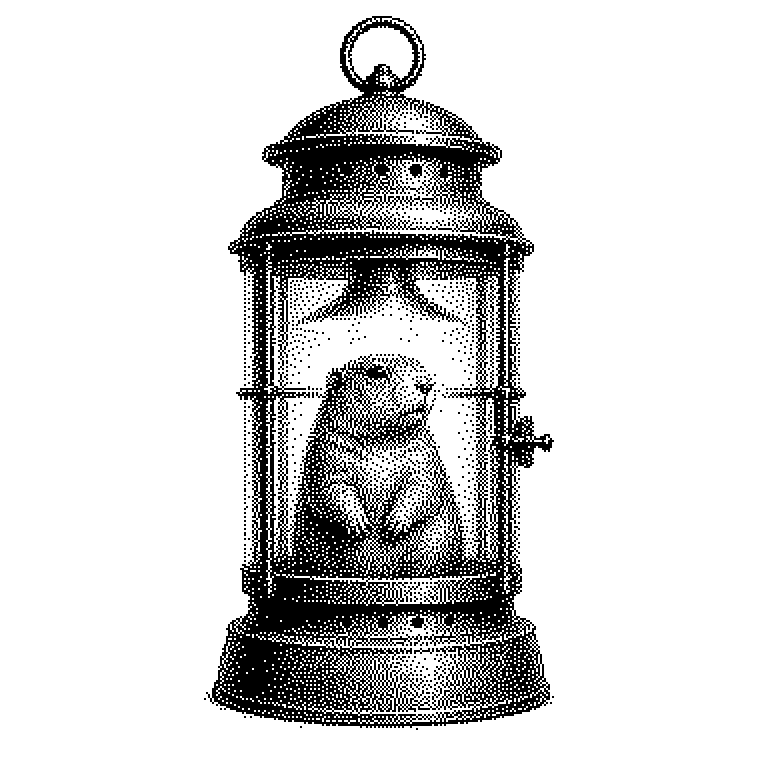
Gopher is an internet service developed in 1991 at the University of Minnesota. It made it possible to retrieve texts and files over the internet — organized into simple, clickable menus. The principle was simple: you selected an entry from a list, and the server sent back the content. There were no images, videos, or formatting. Gopher was pure text, but it was fast, structured, and remarkably easy to use by the standards of its time. It was named after the University of Minnesota’s mascot — the gopher, a small ground squirrel.
Gopher’s role in the early internet
In the early 1990s, the internet was not a place for ordinary users. Information was scattered across various servers, and you had to know how to find it. Gopher solved this problem elegantly: it offered a uniform interface that worked like a nested table of contents. Universities, libraries, and government agencies around the world made their documents available via Gopher servers.
In 1993, at its peak, Gopher was at times more popular than the then still young World Wide Web. Then the University of Minnesota made a consequential mistake: it announced that it would charge licensing fees for commercial use. The Web, by contrast, was open and free. Within a few years, users and providers migrated away en masse. Gopher nearly vanished entirely from the public internet.
How a Gopher server is structured
A Gopher server presents content as so-called selectors — these are entries in a menu list, similar to rows in a table. Each entry has a type: text, directory, search query, or binary file. The client — the program on one’s own computer — displays this list, the user selects an entry, and the server delivers the content. There are no nested layouts, no scripts, no advertising.
The technical foundation is the Gopher protocol, defined in the specification RFC 1436. It is deliberately kept minimal. A request consists, at its core, of a single line of text. This makes Gopher servers extremely lightweight — they run without any trouble on hardware that would be far too weak for today’s web. That is precisely part of its appeal for technology enthusiasts today.
A common misconception: Gopher is not a predecessor of the HTTP protocol underlying the Web. Both existed in parallel for a time. They solved the same problem in different ways — Gopher with a rigid menu structure, HTTP with freely linkable pages. HTTP won because it was more flexible and free of licensing.
Gopher today: niche, nostalgia, and the Smallnet
Gopher plays no role in the broader public anymore. Modern browsers such as Chrome or Firefox do not natively support the Gopher protocol — you need a special add-on program or a proxy. Nevertheless, Gopher still exists. A small community operates active servers, writes texts there, and deliberately maintains the protocol as a counter-design to the modern, ad-saturated web.
In tech circles, Gopher regularly comes up in discussions about the so-called Smallnet — a loose concept for a lean, decentralized internet apart from the big platforms. Anyone interested in the history of the net will also encounter Gopher in every serious retrospective on the early days of the internet. And anyone who wants to understand why open standards win will find in Gopher’s decline a cautionary tale: a technically superior or equally capable system can lose if it chooses the wrong licensing policy.