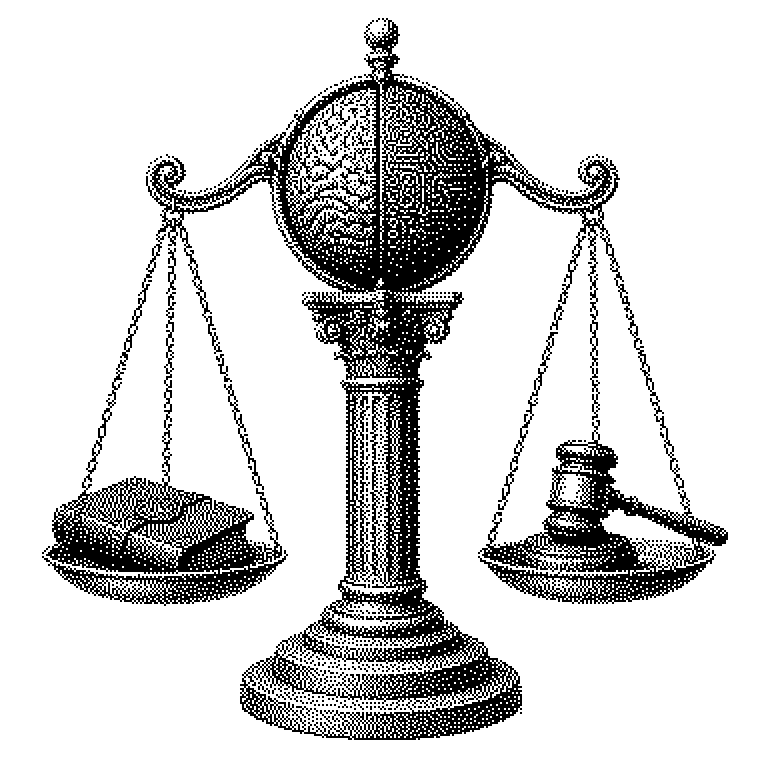
AI Governance
AI Governance refers to all the rules, responsibilities, and controls with which a company or a state steers the use of artificial intelligence. It is not about the technology itself, but about who decides, who is liable, and what is permitted.
When an organization deploys software that independently prepares or makes decisions, tricky questions arise. Who is even allowed to use such a system? Who checks beforehand whether it works reliably? Who is liable if it causes harm? AI Governance is the answer to these questions in the form of fixed rules. This includes written policies, clear responsibilities, and regular checks. The term comes from English and means roughly “steering and oversight.” What is meant, then, is the organizational side, not the programming.
Why it matters
An example makes the problem clear. A bank has software pre-sort which loan applications get approved. If this software systematically rejects people from certain neighborhoods, that is a legal violation. The bank cannot claim that the computer was at fault. That is precisely why companies need demonstrable processes.
On top of that comes pressure from lawmakers. The European Union passed an AI law in 2024, the AI Act. It classifies applications by risk and, for risky applications, demands documentation, testing, and human oversight. Anyone who cannot provide this risks heavy fines. For investors, AI Governance is therefore also a question of business risk.
How does it work?
In practice, AI Governance usually consists of four building blocks. First, a registry: the company lists which AI systems are actually in use. Often even this step is laborious, because individual departments use their own tools. Second, a risk assessment for each system. A chatbot that answers vacation requests is harmless. Software that filters out job applications is not.
Third, rules for operation. This includes which data may be used and when a human must review the result. Fourth, ongoing monitoring. Models get worse over time because reality changes. A system that worked well in 2023 may be off the mark in 2026. That is why the hit rate is measured regularly.
The comparison with accounting works well here. No one expects numbers to simply be correct. There are regulations, receipts, and auditors. AI Governance transfers this idea to AI systems: trust is replaced by evidence.
Where you encounter the term
Job postings now feature titles such as “AI Governance Manager.” Large corporations have their own committees that approve or reject new AI projects. In annual reports, AI Governance appears in the chapter on risks, often alongside data protection and IT security.
In business news, the term usually appears in two contexts. Either it concerns new laws, such as the European AI Act. Or it concerns an incident in which an AI system produced nonsense or disadvantaged people. The question then regularly is whether the controls failed or were missing entirely.
Even as a student you come across it. When a school specifies for which tasks chatbots are allowed and how their use must be disclosed, that is essentially the same principle. Just on a smaller scale.