AI Agent
An AI agent is a computer program that independently breaks down a goal into multiple steps and also carries out those steps. Unlike a pure chatbot, it doesn't just answer — it uses tools such as search engines, calendars, or program code.
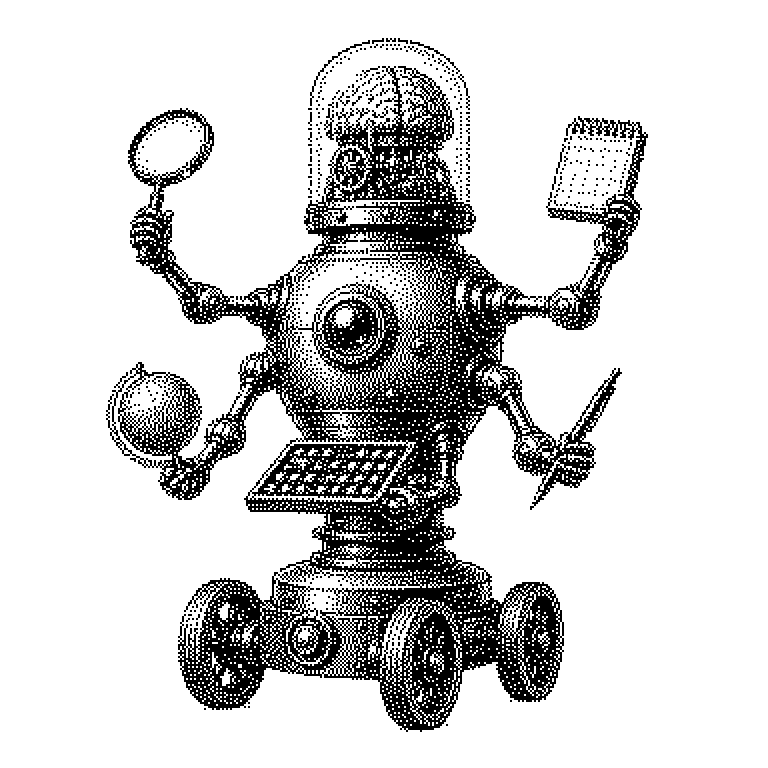
An AI agent is a program that is given a goal and plans the path there itself. So you tell it what should come out at the end, not every single step. The agent then figures out which sub-tasks are needed and works through them. In doing so, it’s allowed to do things, not just talk: search the internet, open a file, send an email. A normal chat program delivers a text and is done. An agent checks its intermediate result and keeps going until the goal is reached or it gives up.
Why this matters
The difference sounds small, but economically it’s huge. A program that gives advice saves a person a few minutes. A program that does the work itself can take over an entire task. This is exactly what many tech companies are pinning their revenue hopes on. That’s why agents have appeared in almost every product announcement since 2024.
At the same time, a new risk arises. A wrong sentence in an answer is annoying. A wrong bank transfer or a deleted file is real damage. Because agents are allowed to act, their mistakes have a direct effect in the world. For this reason, companies and regulators are intensely discussing how much freedom such systems should have.
How it works
At its core is a language model: a program that has learned to continue texts in a meaningful way. This model first writes itself a plan. Then it selects a tool for the first step. Tools are built-in functions, such as a web search or a calculator. The agent formulates a call, the tool returns a result, and this result flows back into the model’s text. This creates a loop of thinking, acting, and observing.
On top of that comes a memory. The agent notes what it has already tried and what came of it. Without these notes, it would run in circles. A comparison helps: an intern is given the task of booking a conference room for twelve people. They check the calendar, find three free slots, ask the facility manager about the room size, and then book. Nobody prescribed this sequence to them. This is exactly the kind of self-organization an AI agent tries to replicate.
In practice, limits are built in. Usually there’s an upper limit on the number of steps, so the agent doesn’t keep calculating endlessly and racking up costs. Sensitive actions often require confirmation by a human. Frequently, several agents work together: one plans, one searches, one checks the result.
Where you encounter the term
Agents are most visible in programming. Tools like GitHub Copilot, Claude Code, or Cursor can read an error message, change the corresponding code, and run the test themselves. In everyday office life, agents show up in support systems that look up an order in the inventory management system and initiate a refund. Browser extensions that fill out forms or compare prices are also marketed this way.
In stock market news, “agentic AI” is a buzzword that software companies use to justify higher prices. Here a critical question is worthwhile: does the system really act on its own, or is it a chatbot with a new name? One clue is whether the product uses tools and manages multiple steps without asking back. Another point is solid figures on the error rate. In independent tests, agents still regularly fail at many multi-step everyday tasks.