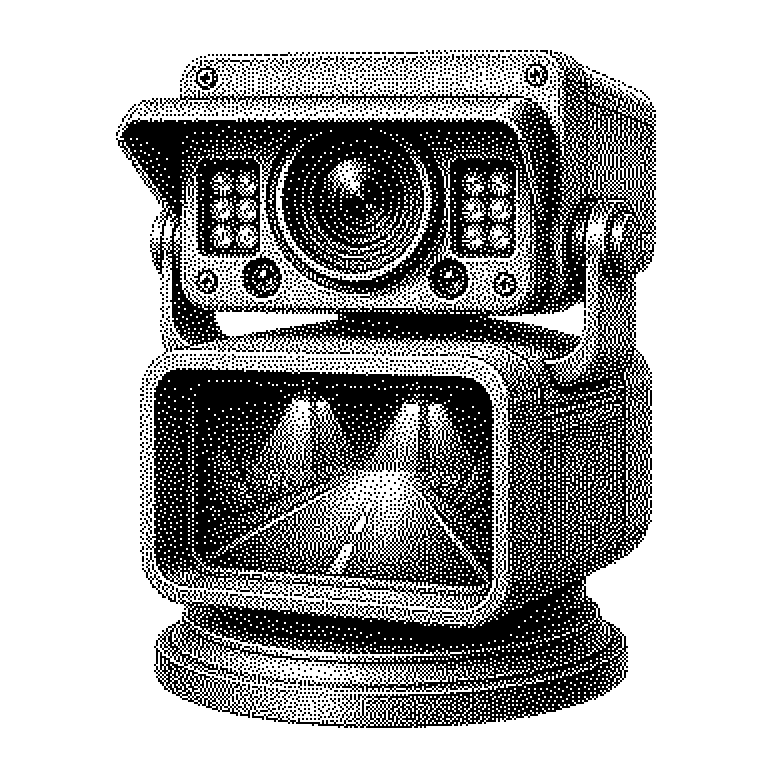
Automatic License Plate Reader
An Automatic License Plate Reader is a system of camera and software that automatically detects, reads, and stores vehicle license plates. It is used by authorities and private companies to track the whereabouts of vehicles or to enforce violations.
An Automatic License Plate Reader, ALPR for short, is a system that combines cameras and software to automatically read vehicle license plates. The camera takes a photo, the software recognizes the character sequence on the plate, and the result is stored together with time and location. This happens in a fraction of a second, often while the vehicle is still moving. A single device can thus capture thousands of license plates per hour — without any human reading them.
Why ALPR has changed law enforcement
Before ALPR, a police officer had to type a license plate into a database by hand to check whether a car was stolen. That takes time and only happens when there is a concrete suspicion. With ALPR, every passing vehicle is checked — without cause, in real time. That is a fundamental difference.
Authorities do not use the collected data only for the moment of capture. Stored location data can be analyzed retroactively: Where was this car three weeks ago at 11 p.m.? Such movement profiles emerge without the affected person noticing or having consented to any surveillance. That is why ALPR is not just a technical tool, but also a data protection issue.
How a license plate is read in milliseconds
The core of the system is a method called optical character recognition (OCR). It analyzes an image and converts shapes into text. For license plates this is initially difficult: poor lighting, motion blur, dirt, or different fonts interfere with recognition. Modern ALPR systems therefore rely on neural networks — software that has learned, by looking at millions of license plate photos, to correctly read even difficult cases.
Infrared cameras help further: they make license plates visible even at night, because the reflective film on plates reflects infrared light particularly strongly. The recognized license plate is then immediately matched against one or more databases — for example, lists of stolen vehicles or outstanding fines. If there is a match, the system raises an alert.
It is also important to note what the system does not do: it recognizes the license plate, not the driver. An ALPR system initially does not know who is behind the wheel. For that information, a separate facial recognition system or other data is needed.
Where ALPR shows up in everyday life
The most visible applications are toll systems and parking garages. On highways in Germany, Austria, or the United Kingdom, bridges with integrated cameras capture license plates to automatically bill tolls. Parking garages use the system to open barriers without a ticket. Here the purpose is clearly limited and obvious to users.
Less visible is the use by private companies. In the US, for example, companies like Motorola Solutions (with its network called Flock Safety) collect millions of license plate scans daily — using cameras in residential neighborhoods, parking lots, and along streets. They sell or license this data to police departments. This creates a nationwide surveillance network made up of private devices.
ALPR regularly appears in the news in connection with civil rights debates. Critics point out that in many countries there is no clear regulation on how long location data may be retained. Proponents emphasize the benefits in finding stolen cars or fleeing suspects. This trade-off — security versus privacy — makes ALPR one of the most widely discussed examples of AI in government hands.